



Table of Contents
Share At:




Listen Article:
0:00 /
0:00
Dialyzer: Optimizing Uremic Toxin Clearance with Advanced Ultrafiltration Coefficients
Table of Contents
Dialyzer Efficiency: Toxin Clearance through Advanced Ultrafiltration
This article aims to explore how modern dialyzers, particularly those with advanced ultrafiltration coefficients, are revolutionizing the efficiency of uremic toxin removal in hemodialysis. It also covers various types of dialyzers, membrane technologies and innovations that contribute to better biocompatibility and patient outcomes.
Introduction: The Critical Role of Dialyzers in Hemodialysis
Dialyzers form the heart of the hemodialysis process, serving as artificial kidneys for patients battling renal failure. As uremic toxins accumulate in the bloodstream due to impaired kidney function, the dialyzer steps in to filter these harmful substances out. With ongoing innovations in ultrafiltration coefficients and membrane materials, dialyzers have become more efficient, safer and patient-friendly. This progression has not only improved treatment outcomes but also expanded the versatility and reliability of dialysis machines in clinical practice.
From Dialysers to Catheters - All in One Place
CONTACT US
Understanding Ultrafiltration Coefficients and Toxin Clearance
At the core of dialyzer performance is the ultrafiltration coefficient, a term that describes how effectively water and solutes pass through the membrane. A higher coefficient means more efficient clearance of uremic toxins while maintaining the delicate balance of beneficial molecules like albumin. This balance is essential to prevent complications and optimize patient recovery post-treatment. The evolution from basic low-flux dialyzers to high-flux reflects a deeper understanding of fluid dynamics and membrane permeability.
Polyethersulfone Dialyzer: The Standard in Membrane Technology
The polyethersulfone dialyzer has emerged as a front-runner in modern dialysis systems, owing to its exceptional biocompatibility and performance. Known for its medical-grade synthetic structure, polyethersulfone membranes are resistant to protein adsorption, reducing the risk of allergic reactions. Their superior porosity enhances toxin diffusion while maintaining structural integrity. This makes them ideal for repeated use, especially when supported by a dialyzer reprocessing machine, extending their lifecycle without compromising effectiveness.
Disposable Dialyzer Cartridge: Simplifying Hemodialysis Workflow
The introduction of the disposable dialyzer cartridge has streamlined dialysis procedures in clinical and mobile settings. These single-use units reduce the risk of cross-contamination and require minimal preparation, offering convenience without compromising safety. Especially in emergency care or resource-constrained environments, disposable dialyzers provide a reliable alternative. They’re also increasingly used in pediatric care, where precise toxin management is critical and infection risk needs to be minimized.
Dialyzer Reprocessing Machine: Extending Usability with Safety
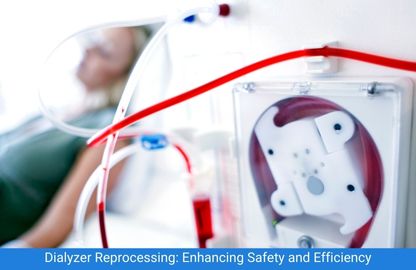
While single-use cartridges are essential in some settings, the dialyzer reprocessing machine plays a vital role in resource optimization. By enabling the safe reuse of hollow fiber dialyzers, these machines reduce operational costs and environmental impact. Reprocessing must maintain the dialyzer’s ultrafiltration efficiency and ensure sterility, making it a delicate balance of safety protocols and technology. High-end reprocessors today are equipped to track usage, assess membrane integrity and maintain consistent performance over multiple cycles.
Hollow Fiber Dialyzer: Innovation in Structure and Flow Dynamics
The hollow fiber dialyzer design is a breakthrough in the efficiency of extracorporeal blood purification. These fibers provide a vast surface area within a compact structure, allowing more effective blood contact with the membrane. Their uniform distribution ensures consistent flow, reducing the risk of clotting and improving clearance rates. Combined with advanced membrane materials, hollow fiber dialyzers strike a fine balance between maximum diffusion and gentle blood handling, reducing shear stress and enhancing patient comfort.
Our Other Products
Dialysis Machine & EquipmentSterile Dialysis Dialyzer Supplier: Ensuring Safety at the Source
The role of a sterile dialysis dialyzer supplier extends beyond logistics. These providers are responsible for ensuring that every dialyzer is pyrogen-free, EO sterilized and sealed under strict quality controls. Inconsistent sterilization can lead to infections, impacting patient outcomes and trust in treatment. Reliable suppliers also support healthcare facilities with multiple configurations to meet diverse patient needs – whether adult or pediatric, high or low toxin load.
Disposable Dialyzer: Balancing Cost, Safety and Performance
The disposable dialyzer represents a significant shift in dialysis practices. These single-use units offer unmatched sterility and eliminate the need for reprocessing. They’re particularly useful in environments with high patient turnover or limited access to sterilization facilities. While cost remains a consideration, the long-term benefits – like reduced infection risk and consistent performance – often outweigh the initial expense. These dialyzers also align with global moves toward minimizing cross-contamination and improving dialysis outcomes.
Low-Flux Dialyzer: A Conservative Yet Effective Approach
A low-flux dialyzer might not have the ultra-high permeability of newer models, but it still plays a critical role in chronic dialysis cases where controlled, gradual toxin removal is preferred. These dialyzers are excellent for patients who may not tolerate rapid shifts in fluid or solute balance. Their design focuses on stability, making them ideal for situations where precision and caution take precedence over speed.
High Flux Dialyzer: Expanding the Boundaries of Efficiency
In contrast, the high flux dialyzer offers a more aggressive approach to toxin clearance. With larger pore sizes and higher ultrafiltration coefficients, it excels in removing middle molecules and water-soluble toxins that may pass untouched by low-flux alternatives. Its use has been shown to result in shorter treatment times and improved post-dialysis well-being. Patients with high toxin loads or fast-developing symptoms benefit immensely from this design.
Hi Flux Dialyzer: Merging Technology and Therapy
Pushing the envelope even further is the hi flux dialyzer – a hybrid innovation that merges the benefits of high permeability with low albumin loss. These advanced devices focus on achieving maximal clearance without sacrificing plasma protein balance. With enhanced priming and rinsing properties, hi flux dialyzers provide consistency across treatments, allowing clinicians to fine-tune therapies while maintaining patient safety.
Dialyzer Machine: Orchestrating the Hemodialysis Symphony
A dialyzer machine is much more than just hardware – it’s the brain behind the operation. Regulating blood flow, monitoring pressures and adjusting ultrafiltration rates, it ensures the smooth execution of every dialysis session. As dialyzers evolve, so do these machines, becoming smarter, more responsive and increasingly automated. Today’s systems are designed to adapt dynamically to patient responses, enhancing the effectiveness of both disposable and reusable dialyzer types.
Dialyzer Medical Device: Regulatory and Functional Significance
The term dialyzer medical device encompasses a broad category that must meet stringent international standards. These devices are tested not only for performance but also for biocompatibility, durability and sterility. Manufacturers must ensure that every unit performs consistently across treatments, regardless of patient variability. This responsibility extends to innovation, pushing the boundaries of membrane science and flow engineering to meet the growing demands of modern nephrology.
Membrane Design and Biocompatibility: More Than Just Filtration
The evolution of membrane design, especially in synthetic options like polyethersulfone, has transformed how dialyzers interact with the body. It’s no longer just about removing toxins – it’s about minimizing immune response, reducing inflammation and preserving blood quality. Biocompatible membranes also reduce clotting risks and improve priming ease. These factors contribute to better treatment experiences and fewer complications, especially in long-term dialysis care.
Exclusive Dialysis Products for Your Hospital
 CONNECT TODAY
Surface Area and Flow Optimization: Customizing Treatment Plans
Dialyzer performance isn’t one-size-fits-all. Available in various surface areas and configurations, modern units can be tailored to specific patient profiles. Whether treating a pediatric case with a low surface area dialyzer or managing a high-weight patient needing broader exposure, customization is key. Flow dynamics also play a role – uniform fiber distribution ensures smooth flow, which directly impacts toxin clearance and patient comfort during the procedure.
Consistent Performance across Treatments: Building Trust in Technology
One of the less talked about but equally important aspects of dialyzer technology is reliability. Healthcare providers and patients alike depend on predictable outcomes. Innovations that allow for consistent performance – like smooth rinsing, low clotting risks and stable ultrafiltration – build trust in both the device and the process. This is particularly crucial in chronic care settings, where patients may undergo hundreds of dialysis sessions each year.
Our Other Products
Dialysis ConcentratesAdvancing Dialysis: The Role of Dialyzers in Modern Renal Failure Management
The journey of dialyzer development is a testament to the intersection of engineering, medical science and patient care. With a focus on optimizing ultrafiltration coefficients, enhancing membrane materials and offering flexibility in device configurations, modern dialyzers are more than just filters – they’re life-sustaining technologies. As advancements continue, the future promises even smarter systems, better biocompatibility and highly personalized treatment options that redefine how we manage renal failure.
FAQs About Dialyzer
It offers excellent biocompatibility and efficient toxin clearance due to its synthetic membrane design.
To ensure sterility and reduce infection risks, especially in high-volume or emergency settings.
Yes, when processed with a dialyzer reprocessing machine under strict protocols.
High flux dialyzers clear more toxins faster, while low-flux types offer gentler filtration.
Its large surface area and uniform fiber layout enhance toxin removal and reduce clotting.



