



Table of Contents
Share At:




Listen Article:
0:00 /
0:00
How Nephroxa CAPD Fluid Supports Consistent Ultrafiltration and Toxin Removal?
Table of Contents
Objective
This article provides a detailed scientific and clinical understanding of how Nephroxa CAPD fluid contributes to consistent ultrafiltration and toxin removal during continuous ambulatory peritoneal dialysis (CAPD). It explores the fluid’s composition, compatibility with peritoneal physiology and how it facilitates stable dialysis performance without relying on exaggerated claims or competitor comparisons.
What Is the Function of CAPD Dialysis Fluid in Peritoneal Dialysis?
CAPD (Continuous Ambulatory Peritoneal Dialysis) uses the peritoneal membrane as a semipermeable barrier for dialysis. The process involves instilling specially formulated dialysis fluid – contained in sterile CAPD fluid bags – into the peritoneal cavity, allowing solute exchange and ultrafiltration to occur over a defined dwell time.
Nephroxa CAPD fluid serves as the medium for these physiological exchanges. Its role is not limited to simply absorbing waste. It must maintain consistent osmotic and diffusion gradients that support controlled movement of uremic toxins and excess fluids from the bloodstream into the peritoneal cavity.
The design of the solution must therefore align with both biochemical and physical principles, enabling a predictable ultrafiltration profile and toxin removal efficiency across repeated exchanges. This reliability is crucial in chronic dialysis patients, where variation in dialysate performance can impact overall health and dialysis adequacy.
Shubham Corporation – Living Dialysis,
Delivering Trust
 EMAIL OUR EXPERTS
How Does Peritoneal Dialysis Fluid Composition Influence Ultrafiltration and Toxin Clearance?
The peritoneal dialysis fluid composition determines how well solutes and water are removed. In Nephroxa CAPD fluid, glucose typically serves as the osmotic agent, creating a concentration gradient that pulls water from the capillary network. Electrolytes such as sodium, calcium and magnesium are balanced to reflect plasma-like conditions, reducing the risk of electrolyte imbalances.
Importantly, buffering agents like lactate or bicarbonate help stabilize pH within the peritoneal cavity, preserving peritoneal membrane function. CAPD fluid may utilize a biocompatible buffer system to minimize irritation or cellular stress, which is critical for maintaining membrane integrity over prolonged CAPD therapy.
The formulation can also influence solute diffusion. A solution with inadequate buffering or improper osmotic gradient may underperform in toxin removal. Nephroxa’s consistent composition may help mitigate this by offering a stable internal environment, allowing diffusion of urea, creatinine and other small to mid-sized uremic solutes.
What Mechanisms Support Consistent Ultrafiltration Using Nephroxa CAPD Fluid?
Ultrafiltration is driven by osmotic gradients and Nephroxa CAPD fluid is designed to maintain these gradients throughout the dwell period. As glucose is absorbed from the peritoneal cavity, the osmotic pressure can drop, reducing ultrafiltration over time. However, the fluid is formulated to sustain osmotic activity for the duration of prescribed dwell times.
This is achieved through controlled glucose concentrations, which are selected based on the desired volume of fluid removal. Nephroxa may offer options that are tailored to varying patient needs – allowing clinicians to manage fluid overload or dehydration effectively without relying on excessively hypertonic solutions.
The consistency in performance can help avoid sudden drops in ultrafiltration, contributing to more predictable outcomes. This supports stable blood pressure, reduced edema risk and long-term peritoneal function preservation – factors which may influence patient quality of life and treatment adherence.
How Do CAPD Dialysis Fluid Bags Impact Exchange Efficiency?
The CAPD dialysis fluid bags used in treatment are not just containers – they are a critical component of therapy. Fluid bags are designed for sterility, ease of handling and compatibility with standard CAPD systems. Their role in supporting consistent ultrafiltration and toxin removal lies in both the quality of the fluid they contain and the reliability of the delivery system.
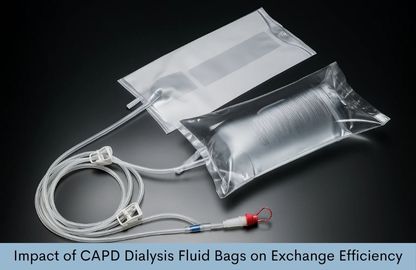
A key element in bag design is the prevention of contamination. If the seal is compromised or if the connectors are not user-friendly, there may be an increased risk of peritonitis, which can impair peritoneal function. CAPD Fluid bags are constructed to support aseptic exchanges, ensuring that the intended therapy proceeds without unnecessary complications.
Additionally, bag volume accuracy is essential. Underfilling or overfilling can affect ultrafiltration rates and toxin removal efficiency. Nephroxa ensures that each CAPD fluid bag delivers the intended volume with precision, aiding in dose accuracy and consistent exchange outcomes.
What Is the Role of Toxin Diffusion in Peritoneal Dialysis?
Solute removal in CAPD is largely dependent on diffusion, the movement of toxins from an area of higher concentration (bloodstream) to one of lower concentration (dialysate). The effectiveness of this process relies on the maintenance of a stable concentration gradient, proper dwell times and an intact peritoneal membrane.
Nephroxa CAPD fluid provides a consistent medium for diffusion by ensuring:
- Appropriate solute-free water content
- Balanced electrolyte composition
- Compatible pH and buffer systems
These parameters allow small solutes like urea and creatinine to passively move into the dialysis fluid during the dwell period. The stability of the fluid’s properties over time ensures that this process remains efficient across all exchanges.
For patients with higher peritoneal transport status, who may absorb glucose faster, may still support effective toxin clearance due to its optimized formulation that aligns with variable transport kinetics.
How Does Nephroxa CAPD Fluid Respond to Variability in Peritoneal Transport?
Peritoneal transport characteristics vary between patients and can change over time due to age, infections or prolonged exposure to bioincompatible fluids. Some patients absorb dialysate glucose quickly, reducing dwell efficiency and ultrafiltration. Others may retain fluid longer but have slower solute diffusion.
Nephroxa’s consistent CAPD fluid composition may help accommodate these variations by maintaining predictable osmotic and chemical properties regardless of patient-specific transport profiles. This predictability is essential when customizing therapy regimens based on peritoneal equilibration tests (PET).
The ability to rely on fluid performance helps clinicians avoid sudden therapy adjustments, contributing to long-term treatment consistency, even as patient physiology evolves.
Can CAPD Fluid Choice Affect Long-Term Peritoneal Health?
Yes, the type of fluid used in CAPD can influence the long-term health of the peritoneal membrane. Solutions that contain high levels of glucose degradation products (GDPs) or have acidic pH can damage the mesothelial cells lining the peritoneum. Over time, this can lead to membrane thickening, sclerosis and eventual ultrafiltration failure.
Nephroxa CAPD fluid may be formulated with a focus on reducing peritoneal irritation. By using biocompatible buffers and controlled osmotic agents, the fluid supports a healthier peritoneal environment. This can preserve the membrane’s selective permeability, enabling consistent ultrafiltration and diffusion over months or years.
Preserving peritoneal integrity is crucial for patients who rely on CAPD as a long-term dialysis modality and fluid choice is a modifiable factor in that equation.
Proven Dialysis Solutions. Trusted by Clinics
 WHATSAPP NOW
What Is the Impact of Peritoneal Dialysis Fluid Price on Treatment Continuity?
Though clinical aspects dominate therapy planning, the peritoneal dialysis fluid price can influence patient access and compliance. High costs or inconsistent availability may lead to skipped exchanges, suboptimal ultrafiltration and poor toxin clearance.
While pricing structure is beyond this article’s scope, the use of a clinically reliable and accessible fluid may support uninterrupted CAPD schedules. A dependable supply can reinforce treatment consistency, which is necessary for maintaining fluid and toxin control over time.
Thus, affordability and accessibility, paired with fluid quality, can collectively impact the success of peritoneal dialysis therapy.
In Conclusion
Nephroxa CAPD fluid supports consistent ultrafiltration and toxin removal by delivering a formulation that aligns with the physiological needs of peritoneal dialysis. From its balanced composition to its osmotic stability, the fluid plays an active role in maintaining predictable dialysis outcomes across varied patient profiles.
Its use may help reduce variability in fluid removal and solute clearance, providing a more stable therapeutic foundation for those relying on CAPD for long-term renal support. By emphasizing consistency in performance, compatibility with peritoneal physiology and user-friendly delivery via CAPD fluid bags, Nephroxa positions itself as a solution designed to meet the enduring clinical demands of peritoneal dialysis.
FAQs About CAPD Dialysis Fluid
It helps remove excess fluid and toxins consistently during peritoneal dialysis through ultrafiltration and diffusion.
By maintaining stable osmotic gradients throughout the dwell time, which allows predictable fluid removal.
Yes, its consistent composition may adapt to variable transport characteristics, supporting reliable dialysis performance.
Yes, a sterile and accurately filled bag supports safe and effective exchanges, contributing to stable outcomes.
Absolutely. Balanced electrolytes, buffering systems and biocompatible ingredients all influence peritoneal health and therapy efficiency.



