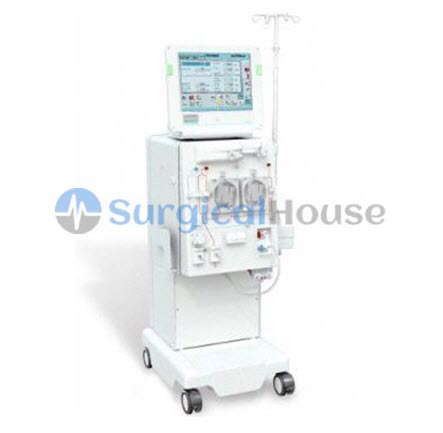
Dialysis machines are life-sustaining medical devices that filter waste and excess fluids from the blood of individuals whose kidneys cannot perform these functions adequately. Dialysis machines’ significance lies in their ability to serve as a substitute for kidney function, an essential bodily process. Despite their notable success, however, it remains the case that the technology employed by dialysis machines has undergone only minor alterations in recent history, and thus there exists an imperative for innovation in order to enhance the quality of life experienced by patients and their overall outcomes.

Current Advancements in Dialysis Machines

There has been notable progress observed in recent times with regard to the technology employed by dialysis machines. One such advancement is the use of high-flux dialysis membranes. These membranes allow for more efficient removal of waste products and toxins from the blood during dialysis treatments. Additionally, the use of ultrapure water in the dialysis process has become more common. This water has fewer impurities and can reduce the risk of inflammation and infections in patients undergoing dialysis.

Another recent advancement is the use of home hemodialysis machines. In comparison to conventional dialysis machines, these machines are comparatively smaller and more compact, thus rendering them portable enough to facilitate dialysis treatments from the convenience of patients’ personal residences. By leveraging home hemodialysis machines, patients can reap a multitude of advantages such as greater control over their treatment, enhanced quality of life, and mitigated healthcare expenses.

Future Developments in Dialysis Machines

Moving forward, we can anticipate further developments in the realm of dialysis machine technology. One such development is the use of wearable or implantable dialysis machines. The forthcoming machines are predicted to be considerably smaller than their conventional counterparts and would permit patients to undergo continuous dialysis treatments without being impeded in their daily routine. This technology could significantly improve patient outcomes by providing a more continuous and efficient form of dialysis.

Another potential development is the use of bioartificial kidneys. These devices would use living cells to mimic the functions of a real kidney. There exists the possibility that bioartificial kidneys could serve as a superior alternative for individuals suffering from kidney failure, offering long-lasting benefits. It is noteworthy that investigations in this realm are currently in their early stages, but the findings thus far hold significant promise.

In addition to this, incorporating artificial intelligence (AI) technology into dialysis machines may be instrumental in augmenting patient outcomes, whilst minimizing the likelihood of undesirable complications.AI algorithms could monitor patient data during dialysis treatments and adjust treatment parameters in real-time to ensure optimal outcomes.

The future of dialysis machines is bright, with several advancements already in place and potential developments on the horizon. These innovative strides hold the potential to substantially enhance patient outcomes and their standard of living. As technology continually progresses, it is reasonable to anticipate even more cutting-edge approaches in the arena of dialysis.

We Provide Any Products, Any Brands
As Per Customers Requirements