



Table of Contents
Share At:




Listen Article:
0:00 /
0:00
Dialysis Chairs: Merging Modern Design with Energy Conservation
Table of Contents
Dialysis Chairs: Modern Design Meets Energy Conservation
Modern healthcare environments are constantly evolving, seeking ways to enhance patient comfort while also prioritizing energy efficiency. Nowhere is this balance more apparent than in the development of dialysis chairs, which play a central role in renal therapy units across the globe. These essential medical furnishings have come a long way from basic functional models to becoming sophisticated pieces of equipment that merge form, functionality and sustainability.
The Complete Range of Dailysis Consumables
TALK TO OUR EXPERTS
Dialysis Chair Design: Moving Beyond the Basics
The evolution of the dialysis chair is more than a cosmetic upgrade. Today’s designs are purpose-driven, considering patient ergonomics, procedural efficiency and energy conservation. Manufacturers now focus on intuitive controls, soft contours and breathable materials that offer both physical support and emotional comfort to patients undergoing long treatment sessions. What sets the newer models apart is their ability to combine aesthetic appeal with the practical needs of medical environments.
These chairs are now equipped with adjustable features, pressure-relieving padding and even integrated technology that simplifies operation for healthcare staff. Such enhancements not only reduce physical strain for caregivers but also ensure that patients feel at ease for the duration of their treatment.
Read Our Article
Choosing a Nephroxa Dialysis ChairDialysis Chair Manufacturer Focus: Blending Form with Function
Every dialysis chair manufacturer today faces the challenge of blending clinical requirements with sustainable practices. It’s no longer enough to deliver a functional product – modern healthcare facilities demand designs that lower energy usage, reduce environmental impact and support longevity without compromising on quality. Manufacturers are embracing smart engineering, using lightweight materials, energy-efficient motors and eco-friendly production processes.
This evolution reflects a larger shift in the medical industry where even something as specific as a renal dialysis chair becomes part of the conversation about environmental responsibility and intelligent design. Manufacturers that lead in this field are those who combine deep medical insight with industrial innovation.
Electric Dialysis Chair Efficiency: Quiet Power, Less Waste
The electric dialysis chair is a breakthrough in both patient care and energy conservation. Instead of relying on manual adjustments, these chairs offer motorized reclining, height modulation and positional memory. But more importantly, they are engineered for efficiency – using low-energy motors that consume significantly less power during use. They also often include standby modes that reduce energy drain when idle.
This integration of smart energy use doesn’t just benefit the facility’s utility bill. It reduces the strain on power resources, aligns with sustainability goals and brings a layer of operational convenience that older models lack. For patients, the smooth, quiet movements contribute to a calming environment – crucial for procedures that can last several hours.
Our Other Products
Dialysis Machine & EquipmentHigh-Quality Dialysis Chair Materials: Comfort with a Conscience
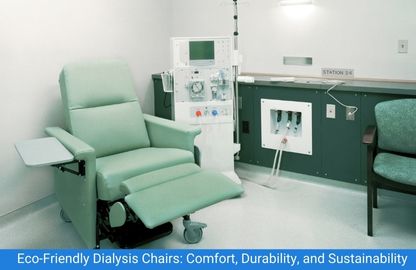
A high-quality dialysis chair goes beyond just appearance or brand reputation – it’s about the materials and craftsmanship that ensure durability, hygiene and comfort. Eco-friendly synthetic leathers, antibacterial finishes and sustainable foam fillings are now preferred. These materials not only enhance patient experience but also contribute to the long-term energy savings by requiring less maintenance, fewer replacements and easier cleaning protocols.
Manufacturers are also adopting modular design principles, allowing parts of the chair to be replaced or upgraded without needing to discard the entire unit. This extends the product’s lifecycle and cuts down on waste – another nod to environmentally responsible design.
Dialysis Chair Innovations: Built for the Future
Innovation in dialysis chairs is no longer limited to comfort features. Modern designs integrate patient monitoring ports, USB charging stations and even wireless connectivity for digital recordkeeping. These integrations help streamline clinical workflows and reduce reliance on external equipment, which in turn minimizes energy consumption across the treatment space.
Additionally, some models come with motion sensors that automatically switch off power functions when not in use, reducing energy draw. Others incorporate solar-compatible elements or energy-return systems that harness and recycle kinetic energy from movement – pushing the boundaries of green design in healthcare.
Dialysis Chair Comfort: Patient-Centered by Design
Patient comfort during long dialysis sessions is crucial. Today’s chairs focus on ergonomic design, adaptive cushioning and personalized positioning systems that cater to each patient’s needs. This isn’t just a matter of luxury – comfort directly impacts patient compliance, satisfaction and overall well-being.
Energy-saving features don’t come at the cost of comfort. Instead, they’re embedded into the design to work silently in the background, maintaining optimal settings without constant manual intervention. This synergy of comfort and efficiency showcases the best of modern design in medical environments.
Proven Dialysis Solutions. Trusted by Clinics
 WHATSAPP NOW
Dialysis Chair Setup: Designing for Smart Spaces
The design of modern dialysis chairs also considers their surroundings. Compact footprints, swivel bases and lightweight frames ensure that chairs can be repositioned with minimal effort, conserving energy used in transport or adjustment. Integrated wheels and cable management systems minimize trip hazards and streamline clinic workflows, adding efficiency without increasing environmental cost.
By incorporating smart spatial planning, clinics can reduce HVAC load, lighting requirements and maintenance needs – indirect but powerful ways that the design of a dialysis chair can contribute to energy conservation on a facility-wide level.
Cost of Dialysis Chair: Balancing Investment with Efficiency
While the cost of dialysis chair options can vary, forward-thinking clinics are increasingly evaluating value based not just on upfront price, but on lifetime operational efficiency. Energy-efficient motors, durable materials and modular parts may carry a slightly higher initial price but deliver long-term savings through reduced utility usage and maintenance.
This perspective shift is reshaping procurement strategies. Decision-makers are recognizing that the true cost of a chair is calculated over years of service – factoring in patient satisfaction, staff efficiency and environmental impact.
Dialysis Chair Ergonomics: Healthier Experiences for All
A well-designed dialysis chair isn’t just good for patients – it supports the health and performance of medical staff as well. Adjustable height settings reduce bending and lifting, while intuitive controls make repositioning smooth and stress-free. These ergonomic advantages reduce staff fatigue and contribute to overall efficiency within the unit.
From an energy perspective, these chairs reduce the need for auxiliary equipment, like footrests or separate examination tables, consolidating multiple functions into one efficient unit.
Renal Dialysis Chair Durability: Designed to Last
A renal dialysis chair needs to withstand extensive use without compromising on safety or performance. Durability is key – not only for cost reasons but also for environmental sustainability. The longer a chair can serve effectively, the less waste is produced over time.
Designs now incorporate reinforced joints, industrial-grade actuators and resistant upholstery that handle both wear and repeated sterilization processes. These elements reduce replacement cycles, minimizing energy and resource consumption across the product’s lifecycle.
Customization also means chairs can adapt to different patient demographics, making them versatile assets within any clinical setting.
Our Other Products
Dialysis DisinfectantsDialysis Chairs: Innovation in Comfort, Sustainability, and Technology
Dialysis chairs have evolved into far more than just seating arrangements. They’re now essential components of energy-smart healthcare design, blending patient-centered comfort with sustainability and technology. Whether it’s through efficient motors, ergonomic design or sustainable materials, these chairs are helping redefine what responsible, modern medical equipment looks like.
And as manufacturers continue pushing the envelope, the future of dialysis chairs promises to be even more innovative – where every design choice aligns with both patient care and environmental stewardship.
FAQs on Dialysis Chairs
It’s used to comfortably support patients undergoing dialysis treatment sessions.
Yes, they use low-energy motors and often include features that minimize power usage when idle.
With proper care, they are designed for long-term use in high-frequency clinical settings.
Yes, many manufacturers offer feature-based customization for clinical needs.
While it depends on the model, many modern chairs include energy-efficient components as standard.



