Table of Contents
Dialysis Chair for Multi-Specialty Clinics: Using One Chair for Multiple Procedures
Table of Contents
Dialysis Chairs: A Game-Changer for Multi-Specialty Healthcare Clinics
In today’s fast-paced healthcare environment, versatility and efficiency are more than just buzzwords – they’re necessities. Multi-specialty clinics are under constant pressure to provide high-quality care to a wide range of patients without sacrificing comfort, safety or productivity. One unsung hero of this transformation? The dialysis chair. Once viewed as a single-function item used only for dialysis sessions, this innovative medical seating is now being reimagined to serve various procedures across multiple disciplines.
From hemodialysis to chemotherapy, from infusion therapy to minor diagnostic work, the modern Dialysis Chair is proving to be more than just a place to sit. It’s a solution. Let’s explore how the humble dialysis recliner chair is revolutionizing multi-specialty clinics, making life easier for both patients and healthcare professionals.
The Growing Demand for Versatile Medical Furniture
As healthcare facilities expand their services, space constraints and budget limitations often pose serious challenges. Multi-specialty clinics must cater to different medical needs – often within the same treatment room or equipment footprint. That’s why versatile medical furniture, especially a motorized dialysis chair, is becoming increasingly important.
Clinics no longer have the luxury of buying dedicated chairs for each type of procedure. Instead, they seek out equipment like the hospital dialysis chair that can adapt to a variety of patient care scenarios. These chairs not only serve the purpose of renal dialysis chair but are also compatible with procedures such as wound care, transfusions and even dental care in some settings. Their multi-use capacity makes them invaluable assets.
Understanding the Dialysis Chair and Its Core Purpose
At its core, the dialysis chair was designed to provide comfort and support to patients undergoing long, often exhausting dialysis sessions. Typically, a dialysis patient chair is used in nephrology units, supporting patients during 3–5 hour treatments where they must remain still, calm and relaxed. The ideal blood dialysis chair includes adjustable reclining features, thick cushioning and built-in features to enhance patient well-being.
But due to its ergonomic design and adaptability, this chair has evolved far beyond its original use. Modern versions come motorized, offering precise positioning, making it a perfect fit for a wide variety of medical procedures.
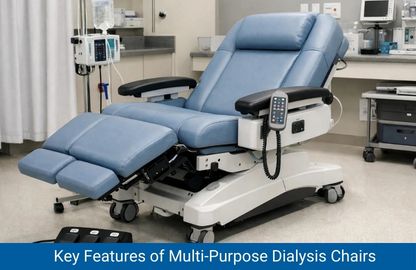
Features That Make Dialysis Chairs Multi-Purpose
Adjustable Backrest and Leg Support
One of the most important features of a hemodialysis chair is its ability to recline and elevate both the head and feet. This adjustability isn’t just about comfort – it’s about functionality. During infusion therapy or chemotherapy, changing positions helps with circulation and reduces discomfort over long periods.
Motorized Operation
A motorized dialysis chair makes adjustments seamless and user-friendly. Staff can quickly shift the patient’s position using a remote or foot pedal, accommodating different procedural needs without having to move the patient.
Patient Comfort and Safety Features
From padded armrests to anti-slip upholstery, the medical dialysis chair is built for hours-long sessions. For multi-use applications, safety rails, locking casters and antimicrobial surfaces make them ideal in diverse clinical environments.
Our Other Products
Hemodialysis Spot MonitorsWhy Multi-Specialty Clinics Are Adopting Dialysis Chairs
The appeal for multi-use dialysis chairs lies in efficiency. Clinics today handle everything from endocrinology to cardiology under one roof. A single piece of equipment that serves various departments without needing relocation or adjustment is a game-changer. This is why the dialysis patient chair is now a staple beyond nephrology clinics, appearing in oncology, rheumatology and even general practice centers.
Key Considerations Before Purchasing a Dialysis Chair
Before investing in a dialysis treatment chair for multi-use, clinics need to evaluate specific factors:
- Weight capacity: Chairs should support a broad range of patient weights without compromising comfort or function.
- Upholstery: Must be medical-grade, easy to sanitize and resistant to fluids.
- Ease of operation: Especially in high-traffic clinics, motorized controls simplify patient positioning, saving time and reducing staff fatigue.
Comparing Dialysis Chair with Standard Medical Recliners
A standard recliner may look similar but lacks the features essential for medical care. The dialysis recliner chair is built for long-term comfort, clinical safety and procedural adaptability. Unlike standard recliners, these chairs can integrate IV poles, support precise patient positioning and handle more weight, making them indispensable in clinical environments.
The Role of Technology in Enhancing Dialysis Chair Use
Modern motorized dialysis chairs incorporate advanced technology – USB charging ports, electronic memory positions, even digital displays for staff to monitor vitals. As AI and digital integration advance, expect future chairs to track session lengths, patient vitals and provide automated alerts.
Patient-Centered Design and Psychological Comfort
The experience of sitting in a renal dialysis chair goes beyond physical comfort. Many designs now include calming color schemes, noise-reduction features and even heating pads. Psychological comfort is vital, especially for patients undergoing treatments like chemotherapy or dialysis, where stress and fatigue are common.
Staff Perspective: Easier Handling and Movement
Healthcare staff benefit from chairs that are easy to maneuver, clean and adjust. Lightweight yet sturdy designs with locking casters and one-touch positioning help nurses and doctors focus more on care and less on equipment logistics.
Top Features to Look for in a Modern Dialysis Chair
- Motorized recline and lift functions
- Padded, adjustable armrests
- Fluid-resistant upholstery
- Locking wheels
- Integrated IV pole holders
- Removable head and footrests
- Safety rails for patient support
Our Other Products
Gambro AK 96 Dialysis MachineConclusion
The evolution of the dialysis chair from a single-use treatment seat to a multi-functional medical powerhouse reflects the future of healthcare: versatile, patient-centric and efficient. For multi-specialty clinics aiming to deliver superior care with streamlined resources, investing in a high-quality dialysis chair is a strategic move. With comfort, safety and adaptability packed into one unit, it’s more than just a chair – it’s a cornerstone of modern outpatient care.