



Table of Contents
Share At:




Listen Article:
0:00 /
0:00
How Dialysis Equipment and Consumables Improve Quality of Life for Kidney Patients?
Table of Contents
Kidney failure is a life-altering condition that disrupts the body’s ability to eliminate waste and excess fluids. For millions of patients worldwide, dialysis serves as a lifeline – a process that substitutes the kidneys’ essential functions. But beyond the core procedure, the quality of dialysis equipment and consumables plays a critical role in determining patient outcomes. Whether it’s the machine that drives the treatment, the dialysis catheter that facilitates access or the dialysis fluid filter that ensures purity, each component must function seamlessly and safely.
This article explores how advanced dialysis machines and consumables – such as dialysis concentrates, AV fistula needles, dialysis disinfectants and bloodline system accessories – collectively improve treatment effectiveness and elevate the quality of life for kidney patients.
The Complete Range of Dialysis Consumables
TALK TO OUR EXPERTS
What Role Does the Dialysis Machine Play in Patient Care?
At the heart of every dialysis treatment is the dialysis machine system. This complex device performs the essential task of filtering blood, removing toxins and maintaining electrolyte balance. Modern dialysis machines are equipped with automated features that monitor flow rates, pressures and ultrafiltration volumes, ensuring precise and individualized care.
The integration of digital controls and real-time monitoring contributes to better patient safety and fewer treatment interruptions. Furthermore, innovations in dialysis machine & equipment design now support home hemodialysis, offering flexibility and autonomy to patients who may otherwise be confined to clinical settings.
How Do Dialysis Consumables Support Treatment Efficiency?
While the machine does the heavy lifting, dialysis consumables ensure the process is safe, hygienic and effective. These products may include:
- Dialysis bloodlines and tubing sets
- Dialyzers (artificial kidneys)
- Injection ports and connectors
- Syringes and anticoagulants
- General dialysis products like disposable medical-grade accessories
These components are single-use or sterilized between uses to maintain hygiene. The compatibility and quality of these consumables can significantly reduce infection risks and ensure efficient treatment delivery.
Why Are Bloodline System Accessories Critical in Dialysis?
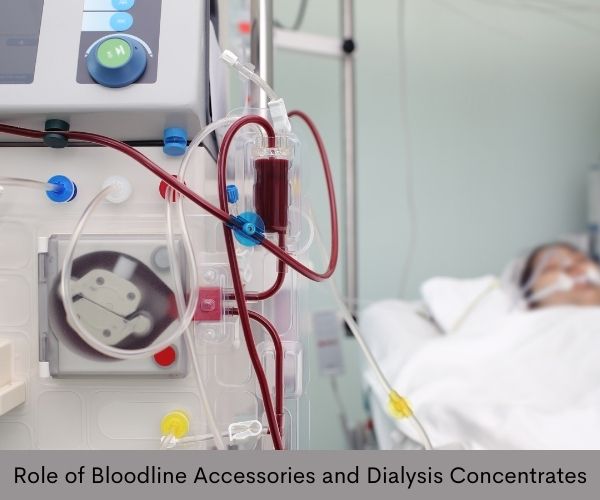
The bloodline system connects the patient’s vascular access to the dialysis machine. It includes a range of bloodline system accessories that must be carefully engineered to avoid clotting, leakage or air embolisms. Products like streamlined bloodline sets and dual-port connectors ensure that blood flows smoothly and efficiently throughout the procedure.
Quality accessories also reduce the burden on the nursing staff by allowing easier priming, connection and disconnection, thereby minimizing potential treatment delays or complications.
What Is the Importance of Dialysis Concentrates in Hemodialysis?
Dialysis concentrates are crucial in forming the dialysate – the fluid that helps remove waste and excess electrolytes from the blood. The correct balance of bicarbonate, electrolytes and acid concentrate is essential to maintain pH and fluid homeostasis in patients undergoing dialysis.
Modern concentrates are highly customizable, enabling clinicians to adjust therapy based on individual patient needs. Precision in formulation reduces complications like acidosis, cramps and imbalanced electrolytes, thus enhancing the overall treatment experience.
How Do Dialysis Disinfectants Ensure Safe Treatment?
With frequent patient contact and open blood pathways, hygiene in dialysis settings is paramount. Dialysis disinfectants play a vital role in sterilizing machines, dialyzers and tubing systems. These include:
- Thermal disinfectants
- Hydrogen peroxide
- Formaldehyde
- Citrosteril
- Cold sterilization liquids
The right disinfectants ensure that microbial contamination is kept at bay, reducing risks of bloodstream infections, which are among the most serious complications in hemodialysis.
What Function Does the AV Fistula Needle Serve?
The AV fistula needle is used to access the patient’s arteriovenous fistula – often regarded as the best long-term vascular access method. These needles are engineered to provide a secure puncture with minimal trauma, promoting better patient comfort and preserving the integrity of the fistula.
High-quality AV needles with siliconized coatings and ergonomic grips improve insertion ease and reduce the chance of needle infiltration or misalignment during treatment.
When Is a Dialysis Catheter Used Instead of a Fistula?
When AV fistulas are not an option, dialysis catheters provide a viable alternative. These flexible tubes are inserted into central veins and are designed for both temporary and long-term use.
Tunneled catheters offer better infection control, while non-tunneled options are useful for immediate and short-term dialysis. Proper catheter design ensures efficient blood flow and reduces the risk of clotting or mechanical failure.
Why Are Dialysis Fluid Filters Necessary?
The purity of the dialysate fluid is crucial, as any contamination can enter the bloodstream. Dialysis fluid filters are responsible for removing particulates, bacteria and pyrogens from the water and dialysate solution.
Two main types of filters – particulate filters and bacterial filters – are used to ensure that the fluid is clean and safe. These filters directly contribute to lowering infection risk and improving the overall safety of dialysis sessions.
How Do Water Treatment Chemicals Improve Dialysis Safety?
The water used in dialysis is extensively treated to remove contaminants like chlorine, heavy metals and bacteria. Water treatment chemicals, such as sodium bisulfite and citric acid, play a vital role in purifying the water supply that mixes with dialysis concentrates.
Consistent use of these chemicals ensures patient safety and prevents complications from waterborne impurities.
Why Are Dialysis Spare Parts Essential for Reliable Therapy?
A well-functioning dialysis machine is non-negotiable. Dialysis spare parts, including sensors, pumps, valves and power supplies, are critical for maintaining machine reliability.
Prompt replacement of worn or faulty components prevents treatment disruptions and ensures that patients receive timely and uninterrupted dialysis therapy.
Proven Dialysis Solutions. Trusted by Clinics
 WHATSAPP NOW
 Shubham Corporation: Empowering Better Dialysis Outcomes
Shubham Corporation is a globally recognized manufacturer, supplier and exporter of high-quality dialysis consumables and equipment. Their comprehensive product range includes bloodline system accessories, dialysis fluid filters, AV fistula needles, dialysis concentrates, dialysis catheters, disinfectants and spare parts.
Backed by rigorous testing and quality assurance, Shubham Corporation’s products are designed to meet stringent medical standards. The organization is committed to improving the quality of life for kidney patients by offering products that support safe, accurate and efficient dialysis care.
Conclusion
Living with kidney failure presents daily challenges – but advancements in dialysis equipment and consumables have transformed the quality of life for countless patients. From machines that deliver efficient therapy to consumables that ensure safety, every component matters. As treatment protocols evolve, the role of high-quality dialysis products becomes increasingly essential in providing reliable, comfortable and life-sustaining care.
Partnering with trusted providers like Shubham Corporation ensures that these critical products are not only accessible but also meet the highest standards of performance and safety.
FAQs About Dialysis Equipment
Dialysis is a treatment that takes over when the kidneys stop working properly. It helps remove waste, toxins and extra fluids from the blood, which the kidneys usually do. People with kidney failure need dialysis to stay healthy.
Dialysis consumables are the tools and supplies used during dialysis treatment. These include items like tubing, needles, catheters, disinfectants and filters. They help make the treatment safe and effective.
A dialysis machine filters a patient’s blood. It removes harmful substances and extra water and then returns clean blood to the body. It acts like an artificial kidney.
Clean water is very important in dialysis because it’s used to make the dialysate fluid. If the water is not properly treated, it can harm the patient. That’s why special chemicals and filters are used to make it safe.
You can get high-quality dialysis consumables and equipment from Shubham Corporation, a trusted supplier and manufacturer of dialysis products. They offer everything from catheters to fluid filters and more.



