



Table of Contents
Share At:




Listen Article:
0:00 /
0:00
How Nephroxa Enhances the Safety and Accuracy of Dialysis Fluid Mixing?
Table of Contents
Objective
This article explores how Nephroxa enhances the safety and accuracy of dialysis fluid mixing, particularly in Continuous Ambulatory Peritoneal Dialysis (CAPD). Focusing on critical elements such as the composition, stability and preparation of CAPD dialysis fluid, the article outlines the technical measures and innovations used by Nephroxa to ensure precise mixing and patient safety. The goal is to provide informative, science-based insights into how modern solutions like Nephroxa’s systems are improving reliability in peritoneal dialysis.
Why is precise mixing of CAPD dialysis fluid crucial in treatment?
CAPD (Continuous Ambulatory Peritoneal Dialysis) is a vital renal replacement therapy for patients with chronic kidney disease (CKD). Unlike hemodialysis, it allows fluid exchange to take place within the peritoneal cavity using dialysis fluid. The composition of this fluid must be meticulously balanced to maintain the osmotic gradient required for effective waste and fluid removal.
Errors in dialysis fluid preparation – such as incorrect electrolyte balance, glucose concentration or contamination – may lead to serious complications including peritonitis, electrolyte imbalance or poor ultrafiltration. This is where Nephroxa plays a pivotal role by designing solutions that may reduce human error and enhance fluid accuracy during CAPD procedures.
By incorporating mechanisms that guide proper fluid reconstitution and control environmental exposure, Nephroxa’s systems aim to ensure that CAPD dialysis fluid bags contain the exact required formulation, helping support safer home and clinical dialysis practices. Their approach may also minimize variability between fluid batches, improving consistency in treatment outcomes.
The Complete Range of Dialysis Consumables
 TALK TO OUR EXPERTS
How does Nephroxa ensure consistent peritoneal dialysis fluid composition?
Peritoneal dialysis success depends heavily on the exactness of the fluid’s chemical composition. The fluid must replicate specific concentrations of sodium, chloride, calcium, magnesium and glucose, while remaining sterile and pH balanced. Nephroxa integrates process validation and control into its CAPD dialysis fluid manufacturing to achieve this reliability.
Quality assurance protocols at every stage of fluid production – from raw material procurement to final packaging – ensure that each peritoneal dialysis fluid bag meets predefined standards. This includes continuous testing for particulate contamination, microbial content, osmolarity and ionic composition. Even the pungent odor associated with properly composed dialysis fluid is monitored, as it indicates the solution’s expected chemical behavior.
Nephroxa’s method includes aseptic filling systems and closed fluid pathways, which may reduce exposure to air or touch – minimizing the risk of infection or deviation in composition. These tightly controlled processes make it possible to maintain the right peritoneal dialysis fluid composition, even during storage over long shelf lives.
In what way can Nephroxa’s systems reduce contamination risks during fluid preparation?
Contamination during fluid mixing or bag connection is one of the primary concerns in peritoneal dialysis. Even minimal exposure to environmental pathogens can trigger peritonitis, a potentially life-threatening complication. Nephroxa addresses this challenge by integrating closed system designs into its CAPD setups.
By using CAPD dialysis fluid bags pre-filled under sterile conditions, Nephroxa’s systems limit manual steps where contamination may occur. Additionally, connection points are engineered to reduce leakage or touch exposure. Materials used for tubing and connectors are tested for biocompatibility and resistance to chemical degradation.
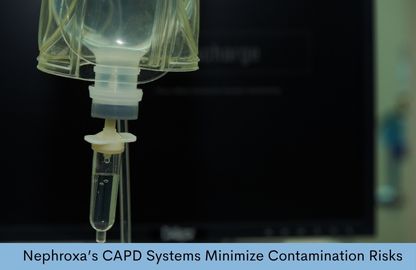
Nephroxa’s infrastructure may also include tamper-evident seals, which alert healthcare providers or patients if the packaging has been compromised. This added layer of security helps ensure that peritoneal dialysis fluid delivered to the patient maintains sterility from production to administration.
Beyond physical design, Nephroxa focuses on user-centric systems that support clear instructions and easy operation. When systems are intuitive, the likelihood of mistakes during dialysis fluid mixing decreases, which may directly improve safety outcomes for CAPD users.
What safeguards exist in Nephroxa’s process to manage dialysis fluid removal accuracy?
Peritoneal dialysis fluid removal, also known as ultrafiltration, relies on the fluid’s osmotic capacity to draw out excess water and waste from the blood. Any mismatch in the fluid’s glucose concentration or volume may compromise this mechanism. Nephroxa contributes to accuracy not just in fluid input but also in enabling effective fluid removal.
The CAPD fluids by Nephroxa are formulated to optimize osmotic gradients, encouraging efficient waste exchange. These formulations are precisely measured to facilitate controlled dialysis fluid removal, maintaining balance without causing dehydration or fluid overload.
Moreover, the packaging of Nephroxa CAPD fluid bags often includes volumetric indicators, which help patients and healthcare providers monitor how much fluid is instilled and drained. The markings are clear, resistant to fading and designed for repeated use, allowing accurate logging of fluid exchange cycles.
Such consistency ensures that treatment aligns with nephrologists’ prescriptions and any deviations in daily removal volumes can be detected early. While technology may never fully eliminate human variability, systems like Nephroxa’s help reduce it to clinically acceptable margins.
How may Nephroxa maintain fluid integrity over long shelf lives?
Shelf life is not only about duration but also about preserving chemical stability and sterility. CAPD dialysis fluid must retain its intended composition throughout storage to remain effective when used. Nephroxa’s formulations and packaging are tailored to protect against temperature shifts, light exposure and material degradation.
Using multilayer barrier film technology in the CAPD fluid bag, Nephroxa helps prevent oxygen ingress and moisture loss – two leading causes of fluid breakdown. These films are resistant to chemical leaching and ensure that the internal environment remains inert until opened.
To further support shelf stability, the bags are stored and shipped under validated temperature conditions, reducing risk during transport. Labels clearly indicate expiration dates and storage guidelines, offering transparency and ensuring end-users follow best practices.
How may Nephroxa simplify the workflow for dialysis professionals and patients?
While clinical-grade precision is critical, usability cannot be overlooked – particularly in home dialysis environments where patients self-administer treatment. Nephroxa incorporates thoughtful design into its CAPD dialysis fluid bags, focusing on simplifying the process without compromising accuracy.
The bags feature intuitive labeling, color-coded ports and easy-tear seals that support safe handling even for individuals with limited mobility. Instructions may be printed directly on the bags, reducing dependency on external manuals. The connection systems are designed for one-way flow, ensuring fluid only moves in the intended direction during the mixing or drainage process.
For dialysis professionals, these features streamline routine checks and training, allowing more time to focus on patient interaction and less on troubleshooting equipment. In hospitals, this may lead to greater throughput and fewer errors per patient session.
Such human-centered engineering not only increases confidence in treatment but also aligns with the primary objective: enhancing the safety and accuracy of dialysis fluid mixing for all CAPD users.
Exclusive Dialysis Products for Your Hospital
CONNECT TODAY
In Conclusion
The future of peritoneal dialysis lies in safety, consistency and ease of use. Nephroxa exemplifies this direction by reengineering how CAPD dialysis fluid is formulated, mixed, stored and administered. From minimizing contamination risks to ensuring stable peritoneal dialysis fluid composition, every step in their process reflects a dedication to precision and patient safety.
By eliminating complexity where possible and embedding accuracy where necessary, Nephroxa enhances not only the mechanical aspects of dialysis fluid delivery but also the human experience. Whether at home or in a clinical setting, the reliability of every CAPD fluid bag contributes to treatment success and peace of mind for patients and providers alike.
FAQs About CAPD Dialysis Fluid
CAPD dialysis fluid is used in peritoneal dialysis to remove waste products and excess fluid from the body through the peritoneal membrane.
Nephroxa uses sterile closed systems, precise formulation controls and tamper-proof packaging to enhance safety and reduce contamination risk.
It includes electrolytes like sodium, chloride, calcium and glucose to facilitate waste removal and maintain fluid balance.
Yes, Nephroxa’s CAPD dialysis fluid bags are designed for both clinical and home use, with features that support safe and easy self-administration.
Nephroxa fluids are designed for long shelf life, often ranging from several months up to a year, depending on storage conditions.



