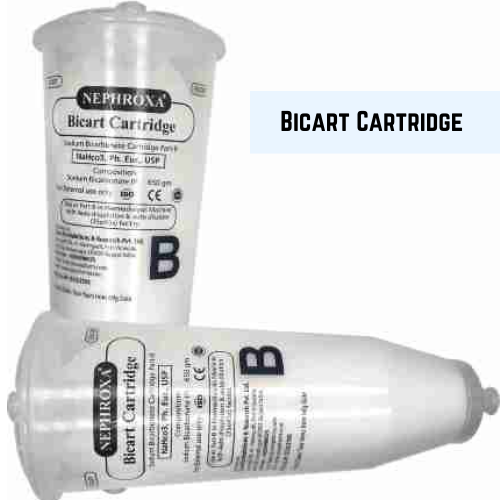
Hemodialysis is a life-saving procedure for individuals with kidney failure. One of the critical components of this treatment is the dialysate, a solution that helps cleanse the blood by removing waste, excess fluids, and toxins. The bicarbonate used in dialysate plays a key role in regulating the blood’s acid-base balance during dialysis. Bicart cartridges have emerged as a highly effective and efficient method for supplying bicarbonate in dialysis treatments. This article explores how Bicart cartridges work, compares them to Bibag and liquid bicarbonate, and highlights the benefits of choosing Bicart cartridges over traditional methods.

Proven Dialysis Solutions. Trusted by Clinics
WHATSAPP NOW

What is a Bicart Cartridge?

Bicart cartridge is a pre-mixed bicarbonate cartridge used in hemodialysis systems. It is a compact, pre-configured unit that contains the necessary bicarbonate chemicals required to create a dialysate solution. Unlike traditional methods that require mixing bicarbonate concentrate with water during treatment, the Bicart cartridge eliminates the need for manual mixing, providing a ready-to-use solution. This pre-mixed bicarbonate cartridge is inserted into the dialysis machine to provide a consistent, controlled supply of bicarbonate during dialysis, making the process more efficient and reliable.

Differences Between Bicart Cartridge and Bibag

While both Bicart cartridges and Bibag systems are designed to supply bicarbonate during dialysis, there are significant differences in how they function and the benefits they offer:

Design and Functionality:

  • Bicart Cartridge: The Bicart is a pre-mixed bicarbonate cartridge designed for convenience and ease of use. It simplifies dialysis by providing a ready-to-use solution with minimal preparation.
  • Bibag: Bibag, on the other hand, is a system that uses bicarbonate concentrate stored in a bag. This concentrate must be mixed with water before use, adding an extra step to the dialysis preparation process.

Storage and Handling:

  • Bicart Cartridge: The Bicart cartridge is easy to store and requires minimal handling. Since it’s pre-mixed, it is stored as a compact, sealed unit, which is more stable and less prone to contamination.
  • Bibag: Bibag systems require careful handling of bicarbonate concentrate and water to ensure the solution is prepared properly. The bags are larger and can require more space for storage and more time for preparation.

Efficiency:

  • Bicart Cartridge: Provides an immediate supply of bicarbonate without the need for mixing, leading to a more efficient dialysis process with less time spent on preparation.
  • Bibag: Requires mixing and can sometimes lead to variations in the quality of the bicarbonate solution if not properly prepared, which can impact the dialysis treatment.

Comparison of Bicart Cartridge and Liquid Bicarbonate

When comparing Bicart cartridges to liquid bicarbonate, the differences in their operation, benefits, and application are important to consider:

Preparation:

  • Bicart Cartridge: Pre-mixed, requiring no additional preparation beyond inserting the cartridge into the dialysis machine. This provides a more streamlined and consistent solution for each dialysis session.
  • Liquid Bicarbonate: Requires mixing of bicarbonate concentrate and water. This process is more labor-intensive and can sometimes lead to inconsistencies in the final solution, especially if proper care isn’t taken.

Storage and Shelf Life:

When comparing Bicart cartridges to liquid bicarbonate, the differences in their operation, benefits, and application are important to consider:

Preparation:

  • Bicart Cartridge: Pre-mixed, requiring no additional preparation beyond inserting the cartridge into the dialysis machine. This provides a more streamlined and consistent solution for each dialysis session.
  • Liquid Bicarbonate: Requires mixing of bicarbonate concentrate and water. This process is more labor-intensive and can sometimes lead to inconsistencies in the final solution, especially if proper care isn’t taken.

Cost-Effectiveness:

  • Bicart Cartridge: The cost-effective nature of Bicart cartridges is reflected in their ease of storage, minimal handling, and consistency, which ultimately reduces labor costs and waste.
  • Liquid Bicarbonate: While liquid bicarbonate may appear less expensive at first, the cost of labor for mixing and storage, along with the potential for waste or contamination, can make it less cost-effective in the long run.

Installation Steps for Bicart Cartridges in Dialysis Machines

The installation of a Bicart cartridge is simple and straightforward, making it an ideal choice for dialysis centers looking to streamline their operations:

  • Unpack the Bicart Cartridge: Open the packaging of the Bicart cartridge and ensure that it is sealed properly.
  • Insert the Cartridge into the Machine: Place the Bicart cartridge into the designated compartment in the dialysis machine. Ensure it is securely placed to avoid any leaks.
  • Connect the Cartridge to the Dialysate System: Connect the cartridge to the dialysate flow system as per the dialysis machine’s instructions. This ensures a continuous flow of bicarbonate during dialysis.
  • Start the Dialysis Treatment: Once the cartridge is installed, the machine will automatically deliver the pre-mixed bicarbonate solution during the dialysis process.

This easy installation process helps minimize the setup time for dialysis procedures and ensures consistency in each session.

Storage and Cost Benefits of Bicart Cartridges

Storage Benefits:

  • Compact and easy-to-store compared to liquid bicarbonate or Bibag systems, which require larger storage areas.
  • Longer shelf life, reducing the need for frequent replacements or reordering.
  • No refrigeration required, making it a space-saving solution for dialysis centers.

Cost Benefits:

  • Reduced Labor Costs: With Bicart cartridges, there is no need for staff to mix bicarbonate, which reduces operational costs.
  • Minimized Waste: Since the Bicart cartridge is pre-mixed, there is less chance of contamination or waste, making it a more efficient and cost-effective solution.
  • Reduced Storage Costs: With compact packaging and extended shelf life, Bicart cartridges offer a cost-effective storage solution for dialysis centers.
Shubham Corporation - Living Dialysis, Delivering Trust
Call Now EMAIL OUR EXPERTS

Conclusion

Bicart cartridges provide a more efficient, convenient, and cost-effective solution compared to traditional Bibag systems and liquid bicarbonate for hemodialysis. With pre-mixed bicarbonate, these cartridges reduce preparation time, minimize waste, and offer consistent, reliable dialysis treatment. The easy installation process, compact storage, and cost savings make Bicart cartridges an ideal choice for healthcare providers aiming to enhance the dialysis experience for patients and optimize operational efficiency.

FAQs About Bicart Cartridge

A Bicart cartridge is a pre-mixed bicarbonate cartridge used in hemodialysis. It provides a ready-to-use, stable bicarbonate solution, eliminating the need for mixing bicarbonate concentrate with water.

Bicart cartridges are pre-mixed and ready to use, whereas Bibag systems require mixing bicarbonate concentrate with water. Bicart cartridges offer more convenience, less preparation time, and better consistency.

Bicart cartridges eliminate the need for mixing, providing consistent results with minimal handling. They are also more cost-effective, with longer shelf life and easier storage compared to liquid bicarbonate.

To install a Bicart cartridge, simply unpack it, insert it into the dialysis machine, connect it to the dialysate flow system, and start the dialysis treatment. It’s a simple and quick process.

Bicart cartridges are compact, long-lasting, and do not require refrigeration, making them easier to store and handle compared to traditional bicarbonate solutions.