Table of Contents
How Does Dry Citrate Dialysate Improve Hemodialysis Compared to Traditional Acid Concentrates?
Table of Contents
Hemodialysis is an essential treatment for patients with kidney failure, involving the filtration of toxins and excess fluids from the blood. The process uses dialysate, a special solution that helps in cleansing the blood. Recently, dry citrate dialysate has emerged as an innovative alternative to traditional acid concentrates. This article explores how dry citrate dialysate improves the dialysis process, offering enhanced benefits over conventional methods.
EMAIL OUR EXPERTS
What is Dry Citrate Dialysate?
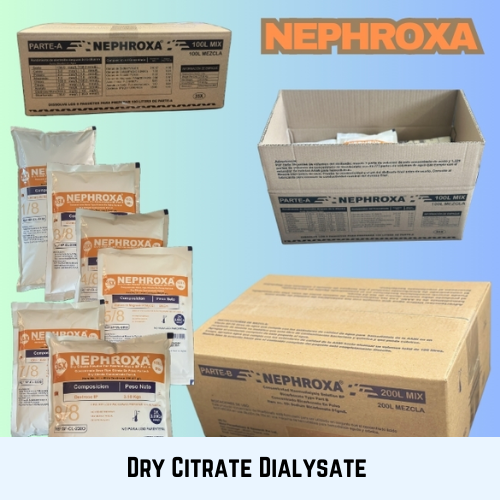
Dry citrate dialysate is a form of dialysate used in hemodialysis that is prepared from citrate salts rather than traditional acid concentrates. Citrate, a naturally occurring compound, plays a crucial role in improving blood filtration efficiency and preventing complications like clot formation during dialysis. Unlike traditional acid concentrates that use strong acids to maintain proper pH levels, dry citrate dialysate is typically in a powdered or dry form, which must be reconstituted with sterile water before use.
Preparation Process of Dry Citrate Dialysate
The preparation of dry citrate dialysate involves mixing a specific amount of citrate salts with water to create a solution that can be used during hemodialysis. The dry formulation allows for easy storage and transport before it’s mixed into the final dialysate solution. Here’s a breakdown of the preparation process:
- Citrate Salts: Dry citrate dialysate consists of citrate salts in a powdered form. These salts are mixed with sterile water to form a citrate-based solution.
- Reconstitution: The dry concentrate is dissolved in water in the correct proportions, allowing healthcare providers to create a fresh dialysate solution for each dialysis session.
- Dialysate Composition: Once reconstituted, the citrate dialysate solution is used in the dialysis machine to purify the patient’s blood. The citrate’s role is to help regulate calcium levels, enhance blood filtration, and prevent clotting.
The dry citrate dialysate provides a simple and cost-effective way to ensure the dialysate solution is fresh and tailored to the patient’s needs.
Differences from Traditional Acid Concentrates
Ingredients:
- Traditional Acid Concentrates: These concentrates typically use strong acids like acetic acid or hydrochloric acid to adjust the pH of the dialysate. These solutions can be corrosive and require careful handling.
- Dry Citrate Dialysate: Uses citrate salts that provide a gentler, more stable pH regulation without the need for strong acids, reducing the risk of adverse reactions and providing a more patient-friendly solution.
Storage and Transport:
- Traditional Acid Concentrates: Typically come in liquid form and require bulk storage and specialized transportation to prevent spills or contamination.
- Dry Citrate Dialysate: Being in a dry form, it is easier to store and transport, and it has a longer shelf life compared to liquid acid concentrates.
pH Regulation:
- Traditional Acid Concentrates: Often require additional adjustments during dialysis to ensure proper pH levels.
- Dry Citrate Dialysate: Automatically maintains ideal pH levels due to the natural buffering effects of citrate, resulting in better control over the dialysis environment.
Clotting Prevention:
- Traditional Acid Concentrates: May not provide as much protection against clot formation, especially if calcium levels fluctuate.
- Dry Citrate Dialysate: The citrate’s ability to bind calcium during dialysis helps reduce clotting risks, providing an added layer of protection for patients with vascular access.
Benefits of Dry Citrate Dialysate in Clot Prevention
One of the key advantages of dry citrate dialysate is its effectiveness in clot prevention. During hemodialysis, the blood flows through the dialyzer, and if not managed properly, the blood can clot inside the machine, causing complications. Citrate plays a critical role by binding to calcium ions, which are necessary for blood clotting. By preventing excessive calcium from participating in clotting processes, dry citrate dialysate helps:
- Minimize thrombus formation during dialysis.
- Improve the stability of vascular access by reducing clotting risks in the dialysis circuit.
- Enhance overall safety by maintaining proper blood flow and minimizing the risk of machine shutdowns due to clotting.
This makes dry citrate dialysate particularly beneficial for patients at high risk of clotting or with difficult vascular access.
Cost-Effectiveness and Storage Advantages
Dry citrate dialysate is not only a clinically superior option but also a cost-effective and practical solution. Here’s how:
- Lower Storage and Transportation Costs: Since it’s in a dry form, dry citrate dialysate takes up less space and has a longer shelf life, reducing both storage costs and logistics expenses compared to liquid concentrates.
- Reduced Waste: The dry formulation allows for precise dosing, which reduces waste and ensures that only the required amount of dialysate is prepared for each treatment. This is especially important in high-volume dialysis settings where cost savings are crucial.
- Longer Shelf Life: Being a dry concentrate, it does not require refrigeration, providing better storage flexibility and reducing the risk of product spoilage compared to traditional liquid concentrates.
Conclusion
Dry citrate dialysate represents a significant advancement in hemodialysis treatments, providing improved clot prevention, cost savings, and greater storage flexibility. By using citrate-based solutions, dialysis centers can offer patients a more efficient, safer, and patient-friendly experience compared to traditional acid concentrates. With benefits like enhanced clot prevention, easy transport, and longer shelf life, dry citrate dialysate is an ideal choice for modern hemodialysis systems.