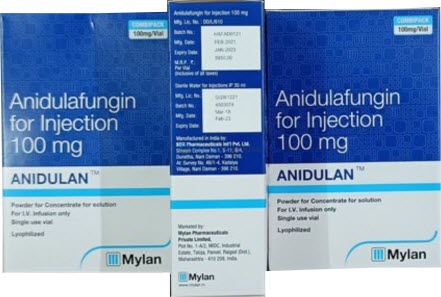
Efficacy of Anidulafungin was evaluated in a multicentre, open-label, non-comparative study. Patients were divided into three age groups, ages zero months to 16 years. In all three groups, anidulafungin was administered at the same dose. Efficacy was assessed in a modified intent-to-treat population, consisting of 64 patients who were microbiologically confirmed with Candida infection. In each subgroup, global responses were better with anidulafungin than fluconazole.
What are The Benefits of Anidulafungin Injection?
GD-Anidulafungin is an echinocandin with fungicidal activity against various Candida species. It has excellent efficacy and is considered the first choice for the treatment of serious Candida infections.
Anidulafungin is a semi-synthetic echinocandin that inhibits the 1,3-b-D glucan synthase. Glucan synthase is present in the walls of fungal cells, and inhibition of this enzyme leads to morphological changes and fungal cell death.
Anidulafungin has shown fungicidal activity against Aspergillus fumigatus fumigatus hyphae. It has also been shown to reduce the organ burden of Candida spp. in experimental infections.
Precautions with Anidulafungin Injection
Several significant clinical studies have investigated the safety and tolerability of anidulafungin in a variety of clinical settings. These studies showed that anidulafungin is safe, effective and has a favourable pharmacokinetic profile. However, the risk of unwanted side effects cannot be accurately predicted.
Although clinical studies have shown that anidulafungin is safe and effective, some side effects have been reported. These effects may require medical attention. However, these side effects cannot be attributed to the drug and do not necessarily lead to discontinuation.
Using the medical device called Anidulafungin is a good way to treat some fungal infections. However, there are a few things you should know before giving it to your patient. This includes dosage, frequency, and the proper way to do it.
The drug has also been associated with infusion-related adverse reactions. The best way to avoid these is to make sure that you use a programmable syringe to administer the medicine.